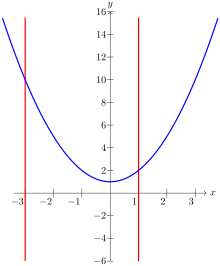
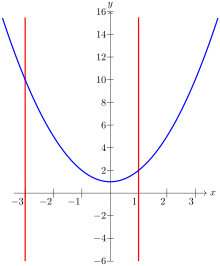
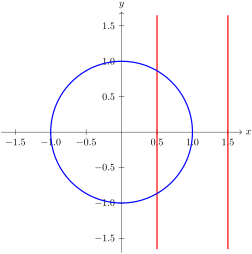
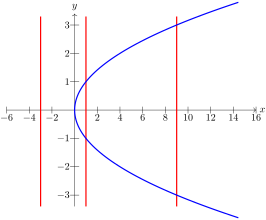
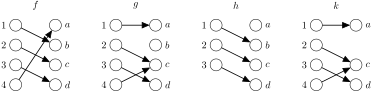
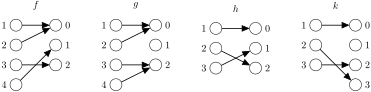
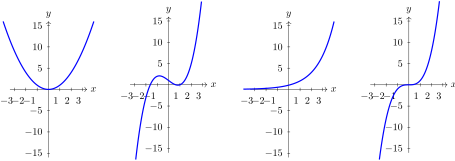
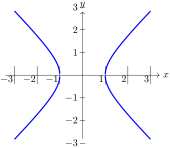
Given a domain set \(X\) and a codomain set \(Y\text{,}\) a rule for a function \(f\) is a set of ordered pairs \((x,y)\) where the first coordinate of each ordered pair, \(x\text{,}\) is an element of the set \(X\text{,}\) the second coordinate of each ordered pair, \(y\text{,}\) is an element of the set \(Y\text{,}\) and the set satisfies the property that each element of the domain is the first coordinate of exactly one ordered pair in the set. For example, if \(X = \{1,2,3\}\) and \(Y=\{0,1,2,3,4\}\text{,}\) then the set
\begin{equation*}
\{(1,0),(2,3),(3,3)\}
\end{equation*}
is the rule for a function because \((1,0)\) is the unique ordered pair with first coordinate 1, \((2,3)\) is the unique ordered pair with first coordinate 2, and \((3,3)\) is the unique ordered pair with first coordinate 3. On the other hand, the set \(\{(2,1), (2,3), (3,2)\}\) is not the rule for a function for two reasons. First, there is no ordered pair with 1 as the first coordinate. Second, there are two different ordered pairs with 2 as the first coordinate. Either of these reasons justifies that the set is not the rule for a function.